About this site
Why We Called It Diplomacy Sucks
Diplomacy had its chance.
It smiled.
It nodded.
It formed committees.
It issued statements.
It avoided responsibility.
And in the end, it sucked.
At least the kind of diplomacy we’ve all come to recognize — the vague language, backroom grins, polite evasions, and professional courtesy that buries truth under a nice clean blanket of buzzwords, cowardice, and “let’s not stir things up.”
Well, somebody needed to stir things up.
Diplomacy Sucks was created because the truth had been whispered long enough. Too many people saw the problems. Too many people knew what was broken. Too many people sat in meetings, church pews, coffee shops, boardrooms, and living rooms saying one thing privately while publicly pretending everything was fine.
It wasn’t fine.
And it still isn’t.
This publication was born from a simple belief: some truths cannot be politely suggested. They have to be bluntly spoken. They have to be dragged into the light, dusted off, named correctly, and placed directly in front of the people who keep pretending not to see them.
That is where T.C. Andrews and Axel Calloway come in.
Two voices.
Two styles.
One refusal to keep quiet.
T.C. brings the sledgehammer. Axel brings the scalpel. One swings hard. The other cuts clean. But both are aimed at the same target: the comfortable lies that allow communities, institutions, leaders, and citizens to avoid responsibility while everything around them slowly deteriorates.
Diplomacy Sucks does not exist to be agreeable.
It exists to be honest.
Sometimes brutally.
Sometimes elegantly.
Always deliberately.
Because sometimes there just isn’t a nice way to say it.
And pretending otherwise is how dysfunction gets tenure.
How Rural Reboot Became the Mission
When Diplomacy Sucks first began, it was a platform for commentary — sharp, honest, unapologetic commentary about politics, culture, leadership, hypocrisy, civic failure, institutional cowardice, public stupidity, and the many flavors of willful ignorance that keep society limping along like a three-legged mule in a parade.
That broader mission has not changed.
Diplomacy Sucks will still take aim at nonsense wherever it shows up — in government, media, education, culture, public behavior, political theater, committee rooms, online mobs, and the special little corners of society where bad ideas go to breed and multiply.
There will be articles that target ignorance.
There will be articles that target stupidity.
There will be articles that target hypocrisy, laziness, civic cowardice, manufactured outrage, bureaucratic absurdity, and the growing national talent for pretending obvious things are complicated.
Because some problems are not rural.
Some problems are just stupid.
And they deserve attention too.
But as the work developed, one theme kept forcing its way to the front:
Small towns are dying.
Not all at once. Not always loudly. Not always dramatically.
Sometimes they die one empty storefront at a time.
One demolished historic building at a time.
One young family leaving at a time.
One failed school report at a time.
One ignored city meeting at a time.
One “that’s just how we’ve always done it” at a time.
That realization became Rural Reboot.
What started as a subcategory evolved into a primary focus because it became impossible to ignore. The decline of rural communities is not a side issue. It is not background noise. It is one of the defining failures of modern America — and it is happening in plain sight while too many people either shrug, deny it, or decorate it with pageants, parades, popcorn, and promotional slogans.
T.C. Andrews and Axel Calloway both have roots in small communities. They know the rhythms, the pride, the stubbornness, the beauty, and the rot. They know what these places once were, what they still could be, and what they are becoming when no one has the courage to confront reality.
They have seen the decline.
They have seen the vacant buildings.
The closed schools.
The aging leadership circles.
The young talent that leaves and never comes back.
The local governments that confuse survival with progress.
The civic groups begging for volunteers while citizens complain from the cheap seats.
The old guard clinging to control long after the town has started slipping through their fingers.
So while Diplomacy Sucks remains the larger platform for saying what needs to be said, Rural Reboot has become its central campaign.
Diplomacy Sucks is the voice.
Rural Reboot is the mission.
And every now and then, when ignorance gets too loud or stupidity gets too comfortable, we reserve the right to point at it directly and say, “There. That’s the problem.”
What Rural Reboot Is
Rural Reboot is the serious work beneath the sharp edge of Diplomacy Sucks.
It is where the criticism becomes focused.
Where the frustration becomes analysis.
Where the blunt truth becomes a roadmap.
Rural Reboot is about small towns, rural communities, forgotten regions, and the people still trying to keep them alive despite decades of neglect, denial, poor leadership, bad planning, cultural stubbornness, economic erosion, and civic apathy.
It is not nostalgia dressed up as policy.
We are not here to pretend every small town was once Mayberry and can be saved with a festival, a mural, and a Facebook post.
We are here to ask harder questions.
Why are our communities losing population?
Why are young people leaving?
Why are schools struggling?
Why do local governments resist change?
Why do we demolish historic assets and then wonder why no one invests?
Why do citizens complain but refuse to show up?
Why do we tolerate weak leadership just because it is familiar?
Why do we keep confusing activity with progress?
Most rural communities are not failing because of one bad decision.
They are failing from accumulated neglect.
Layer by layer.
Year by year.
Excuse by excuse.
Rural Reboot exists to pull those layers apart.
But it does not stop there.
Rural Reboot is not just criticism with better punctuation. It is not a complaint department for dying towns. It is diagnosis first, then proposed treatment.
We will identify problems clearly, examine why they exist, and offer suggested solutions where solutions are possible. Some will be practical. Some will be uncomfortable. Some will require communities to rethink old habits, challenge familiar leadership, rebuild civic trust, and admit that the way things have always been done may be exactly why things are not working.
But let’s be honest: there are no magic fixes.
No article can save a town by itself.
No outside idea can work without local action.
No plan matters if nobody follows through.
No community recovers because people nodded along and then went back to doing nothing.
The rural communities that have recovered did not do it overnight. Many took years — sometimes decades — of steady effort, painful decisions, leadership changes, private investment, public cooperation, civic participation, and stubborn follow-through.
Recovery is possible.
But it is not automatic.
It requires more than pride.
It requires more than nostalgia.
It requires more than another festival, another slogan, another grant application, or another meeting where everyone agrees something should be done and then nobody does it.
Rural Reboot will offer ideas, frameworks, criticism, solutions, and honest assessments. But the work belongs to the community. The people who live there have to decide whether they want recovery badly enough to endure the inconvenience of actually changing.
That is the part most towns avoid.
That is also the part that determines whether they survive.
About the Authors
T.C. Andrews & Axel Calloway
Two writers. One mission. Different weapons.

T.C. Andrews
T.C. Andrews does not ask permission to speak the truth. He just does.
His writing is a verbal wrecking ball aimed at small-town hypocrisy, civic cowardice, institutional laziness, and the slow suicide of silence. If a town is dying and no one will say why, he will. And he will not wrap it in tissue paper first.
Andrews writes for the people who are tired of polite lies, tired of ceremonial leadership, tired of watching communities decline while everyone pretends another committee, another slogan, or another ribbon-cutting will fix it.
He is blunt, biting, and sometimes borderline surgical with a sledgehammer.
Subtle? Not often.
Necessary? Usually.

Axel Calloway
Axel Calloway is no less committed to the truth, but he prefers a cleaner instrument.
Where Andrews swings, Calloway dissects. His words are calm, deliberate, intelligent, and laced with the kind of quiet venom that does not need to raise its voice. His style is refined, but the blade is still sharp.
Calloway writes for those who believe truth can be elegant, that facts can be devastating, and that a properly placed sentence can expose more failure than a shouted accusation ever could.
He does not rant.
He simply removes the mask and lets the face underneath do the damage.

The Collaboration
Together, Andrews and Calloway created Diplomacy Sucks as a platform for fearless commentary, relentless truth-telling, and the end of polite decline.
One speaks with fire.
The other with ice.
What they share is a refusal to let dysfunction go unchallenged.
And through Rural Reboot, that mission has narrowed into something more urgent: confronting the decline of small communities before there is nothing left to save but the water tower and a few faded festival banners.
The work is not just about criticism.
It is about recovery.
But recovery starts with honesty. And honesty starts by saying the thing everyone already knows but too many are afraid to say out loud.
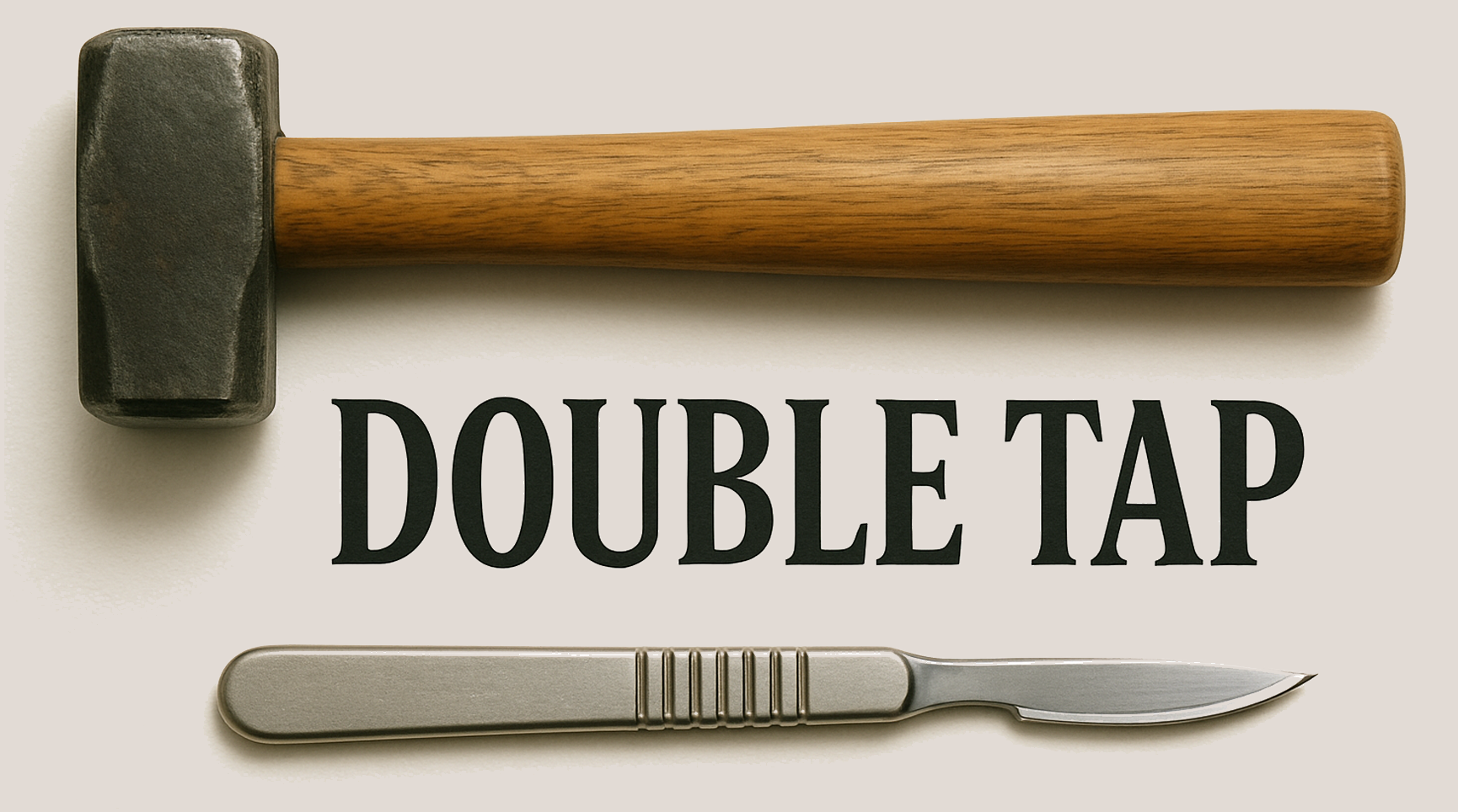
The Scalpel and the Sledgehammer
We publish essays, editorials, serialized commentary, and long-form examinations of rural decline, civic failure, leadership rot, institutional complacency, cultural denial, public ignorance, and the kind of everyday stupidity that somehow keeps getting promoted to policy.
We say what people are thinking but will not say publicly because their cousin’s neighbor is married to the mayor’s sister and they still want to be invited to church potlucks.
We do not do neutrality for the sake of looking respectable.
We do clarity.
We do accountability.
We do uncomfortable truths.
And when necessary, we do it loudly enough that the people hiding behind procedure, tradition, and “that’s not how we do things here” can hear it from the back row.
But we are not here just to point at the fire and complain about the smoke.
Especially through Rural Reboot, we will identify problems clearly, examine why they exist, and offer suggested solutions where solutions are possible. Some will be practical. Some will be uncomfortable. Some will require communities to rethink old habits, challenge familiar leadership, rebuild civic trust, and admit that the way things have always been done may be exactly why things are not working.
But there is no guarantee.
A suggestion is not a solution until somebody acts on it.
A plan is not progress until somebody follows through.
A community cannot be saved by an article, a slogan, a consultant, a grant, or a committee that meets three times and quietly dies in a folder.
Recovery takes time. It takes discipline. It takes leadership. It takes citizens who show up after the excitement wears off. It takes cooperation from people who may not like each other but still have to live in the same town. It takes years of effort, not weeks of enthusiasm.
Many rural communities that have recovered did so only after years of hard work, intentional planning, investment, patience, and persistence. They did not survive because someone gave a good speech. They survived because enough people finally decided that survival required action.
That is the standard.
That is the challenge.
And that is the uncomfortable truth.
Our Manifesto
Most small towns are not failing by accident.
They are failing from the inside out.
Bad leadership.
Broken systems.
Willful blindness.
Civic apathy.
Economic denial.
Cultural stubbornness.
A dangerous attachment to doing things the same way long after the results have become obvious.
But rural decline is not the only disease worth diagnosing.
We also believe ignorance deserves no sanctuary.
We believe stupidity should not be protected by politeness.
We believe bad ideas do not become respectable just because they are popular, traditional, emotional, or wrapped in a flag, slogan, degree, title, or committee recommendation.
We believe public nonsense should be named before it becomes public policy.
We believe accountability matters more than decorum.
We believe polite silence is just cowardice in a nicer shirt.
We believe people deserve the truth, even when it stings.
We believe rural communities can survive, but not if they keep mistaking nostalgia for strategy.
We believe solutions matter — but only when people are willing to act on them.
We believe recovery takes time, discipline, leadership, participation, and follow-through.
We believe showing up matters.
We believe leadership is not a title, a nameplate, a family legacy, or a chair at the head table.
We believe decline should be confronted before it becomes permanent.
And we believe the time for soft language is over.
So we write.
Clearly.
Loudly.
Deliberately.
Without apology.
What You Get
Access All Areas
Sign up and unlock the full archive — everything already said and everything still coming.
No filters.
No fluff.
No polite little civic bedtime stories.
Just essays, commentary, analysis, and unapologetic reality checks for people who still care enough to be irritated.
Fresh Content, Delivered
Get new pieces delivered straight to your inbox.
No algorithms.
No gatekeepers.
No waiting for social media to decide whether the truth is “engaging” enough.
When something drops, you will know.
And odds are, somebody somewhere will wish you had not read it.
That is usually a sign we are getting close to the nerve.
Meet People Who Still Care
This is for the rabble-rousers, truth-slingers, hometown heretics, frustrated citizens, reform-minded leaders, and quiet observers who have had enough of civic theater and small-town make-believe.
It is for the people who still believe their communities are worth fighting for.
Not worshipping.
Not romanticizing.
Fighting for.
Because caring about a place does not mean pretending it has no problems.
Sometimes love of place means telling the truth about what is killing it.
The Bottom Line
Diplomacy Sucks is the broader platform — the voice that calls out hypocrisy, ignorance, stupidity, civic cowardice, political theater, cultural denial, and public nonsense wherever it appears.
Rural Reboot is the primary mission — the focused campaign to examine why rural communities are declining, what can be done about it, and why recovery requires more than talk.
We will offer solutions.
We will not promise miracles.
Because in the end, no community is saved by being diagnosed.
It is saved only when its people decide to act.
Your subscription does not just keep the lights on.
It keeps the truth moving.
It supports independent writing that is willing to say what polite institutions avoid, what local power circles resent, and what too many citizens already know but rarely hear stated plainly.
You are in the right place if you are tired of fluff, fakery, dead-end leadership, performative civility, and the same old civic theater dressed up as progress.
Thanks for backing something that says what needs to be said.
And share it with the people who still care about their home turf.
The comfortable ones may not like it.
That is not a flaw in the system.
That is the system working.